 04 Nov 2026

As the lithium battery industry expands rapidly, large amounts of smelting residue containing toxic heavy metals like beryllium and thallium are accumulating, posing severe environmental risks.
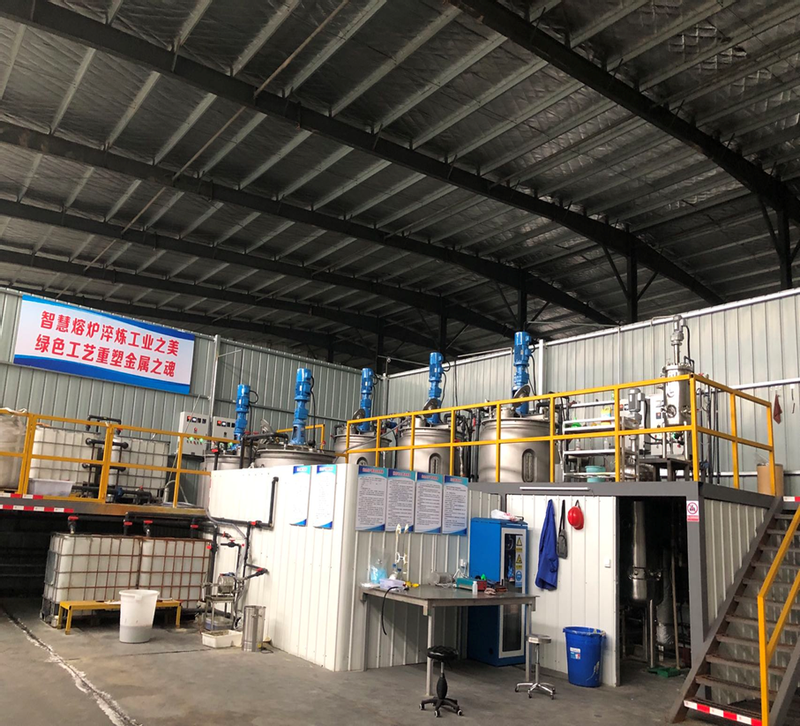
At the 26th China International Industry Fair (CIIF), a team led by Professor Xu Zhang from the School of Biotechnology at ECUST presented a bioreactor system for resource recovery and harmless treatment of metal-containing solid waste. This integrated system has completed pilot-scale validation, offering a new path for the closed-loop development of the lithium battery industry.
China produces millions of tons of lithium smelting residue annually. Landfilling, a conventional disposal method, may allow toxic elements to be released again under extreme conditions. Moreover, valuable strategic metals such as rubidium and cesium are often buried along with the residue, causing huge resource waste.
To address these challenges, the team partnered with Jiangxi Jiahe Metallurgical Industry Co., Ltd. to develop a bioleaching technology based on acidophilic microorganisms. These microbes produced bio-acids that precisely separated toxic elements from valuable metals under mild conditions, achieving higher leaching efficiency than inorganic or organic acids at the same concentration. “Put simply, we let microbes ‘eat’ the waste and ‘spit out’ the treasures,” explained Professor Zhang.
Compared with traditional methods, this technology offers distinct advantages. It operates at ambient temperature and pressure without wastewater or waste gas emissions, realizing internal water circulation and eliminating secondary pollution. Energy consumption is reduced by over 60% compared to acid leaching, and the microbial fermentation process can fix carbon dioxide, aligning with China’s dual carbon goals. The process requires no complex anti-corrosion or high-pressure equipment, ensuring operational safety while achieving comprehensive recovery of strategic metals like lithium, rubidium, and cesium.
The team has developed a 3,000-liter pilot bioreactor and identified key principles for scaling up the process and equipment. Test results showed that the leaching toxicity of beryllium and thallium met the requirements for Class I non-hazardous industrial solid waste. The recovery rate exceeded 95% for lithium and 90% for both rubidium and cesium.
The technology has passed expert evaluation from the Ministry of Ecology and Environment and has been recognized as filling a technological gap both in China and internationally. With an estimated investment payback period of less than three years, it offers strong environmental and economic benefits.
This technology is also applicable to other types of metal-containing solid waste, providing new solutions for non-ferrous metallurgy and mining industries. The team is currently preparing to build a 10,000-ton-scale industrial demonstration line, expecting large-scale commercial application in the next two to three years to support the green development of the new energy sector.